
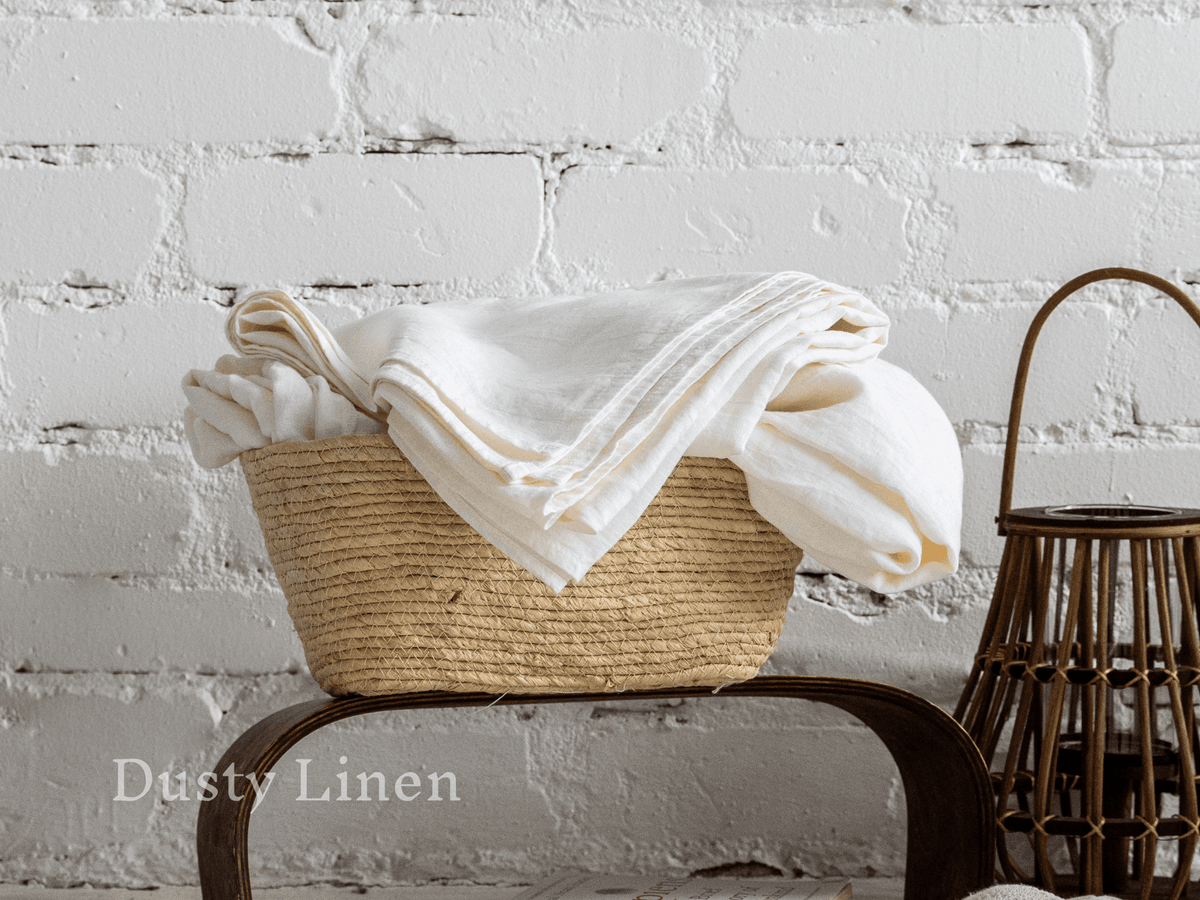
Linen bedding does not need complicated care.
In fact, the simpler you keep the routine, the better.
The main things to avoid are excessive heat, harsh detergents, overloaded washing machines and products that leave residue on the fibres.
If you keep those few things in mind, linen is very easy to live with.
Before washing
Start by checking the care label on your bedding.
Even when two products are both made from linen, details such as dyes, finishing and construction can affect the recommended care.
For DUSTY LINEN bedding, I generally recommend washing with similar colours and avoiding very heavy fabrics in the same load.
Do not overload the washing machine.
Linen needs room to move freely in the drum, rinse properly and come out less heavily creased.
What detergent should you use?
Use a mild liquid detergent.
I prefer liquid detergent because it dissolves easily and is less likely to leave visible residue on the fabric.
Avoid:
- bleach
- aggressive stain removers unless specifically suitable for linen
- fabric softener
- excessive amounts of detergent
Fabric softener is especially unnecessary with linen.
Linen naturally becomes softer with washing and use, so there is no need to coat the fibres with additional softening products.
What temperature should you wash linen bedding at?
For regular washing, use cold or lukewarm water.
A gentle cycle around 30–40°C is usually enough for normal household use.
Very hot water can increase shrinkage and put unnecessary stress on the fibres.
There is rarely a reason to wash linen bedding at the highest temperature available on the machine.
Which washing cycle is best?
Choose a gentle or delicate cycle.
You do not need an aggressive wash to clean linen properly.
A gentler cycle reduces unnecessary friction and wear.
If your washing machine allows you to adjust the spin speed, a moderate spin is usually enough.
Very high-speed spinning can leave the fabric more heavily creased.
Can linen bedding be washed with other fabrics?
Yes, but I would keep the load relatively similar.
I avoid washing linen bedding together with:
- heavy jeans
- towels that shed a lot of lint
- items with zippers or rough hardware
- very dark colours if the linen is light
Washing similar textiles together reduces unnecessary friction and helps the linen rinse more evenly.
What about stains?
Treat stains as soon as reasonably possible.
Instead of rubbing aggressively, blot the area gently.
For many everyday stains, a little mild detergent and cool or lukewarm water is enough.
Strong stain removers can affect colour, so always test a product carefully first if you are unsure.
How should linen bedding be dried?
Linen can be air dried, but I also recommend using a tumble dryer.
A gentle, low-heat setting can help the linen relax and become even softer after washing. This is especially nice with softened linen, because the movement in the dryer helps bring back that soft, relaxed feel.
The important thing is to avoid high heat.
Too much heat can increase shrinkage and put unnecessary stress on the fibres.
If using a tumble dryer:
- choose a low-heat or gentle programme
- avoid very hot drying cycles
- do not overdry the linen
- remove it once dry or while still very slightly damp
Used this way, tumble drying can actually help the linen feel softer and more comfortable, rather than harming it.
Air drying is still perfectly fine, but if you want that softer, more relaxed feel, I often prefer a gentle tumble dry.
Should linen bedding be ironed?
Only if you want to.
Linen naturally wrinkles, and I do not consider that a flaw.
If you prefer a smoother finish, ironing while the fabric is still slightly damp usually works best.
Steam can also help relax stronger creases.
But there is no need to iron linen simply because it has been washed.
Does linen become softer over time?
Usually, yes.
One of the qualities people often notice with linen is that it becomes more relaxed with repeated washing and use.
That is why I would not try to force softness with fabric conditioners.
Let the fabric change naturally.
Our linen bedding is already softened before use, so it starts with a more relaxed feel than untreated linen.
How do you store linen bedding?
Make sure the bedding is completely dry before storing it.
Keep it in a dry, ventilated place.
I would avoid storing linen for long periods in sealed plastic packaging, especially if there is any possibility of residual moisture.
A fabric bag, linen cupboard or breathable storage space is usually enough.
What are the most common mistakes?
The ones I see most often are simple:
Too much detergent
More detergent does not mean cleaner linen. Residue can make the fabric feel stiff.
High heat
Very hot washing or drying can increase shrinkage and wear.
Overloading the machine
Linen needs space to rinse properly.
Using fabric softener
It is unnecessary and can coat the fibres.
Leaving stains untreated for too long
Fresh stains are usually much easier to deal with.
Overdrying
Very dry linen can feel harder and develop deeper creases.
A simple routine is usually enough
Linen bedding does not need to be treated as something fragile.
It is made to be used.
Wash it gently.
Use a mild detergent.
Avoid unnecessary heat.
Give it enough room in the machine.
And if you want the fabric to feel especially soft and relaxed after washing, use a gentle tumble-dry cycle on low heat.
That is usually all it needs.
Rita


